

Rapid adaptation and extinction of Arabidopsis in a changing climate
07 04 2026
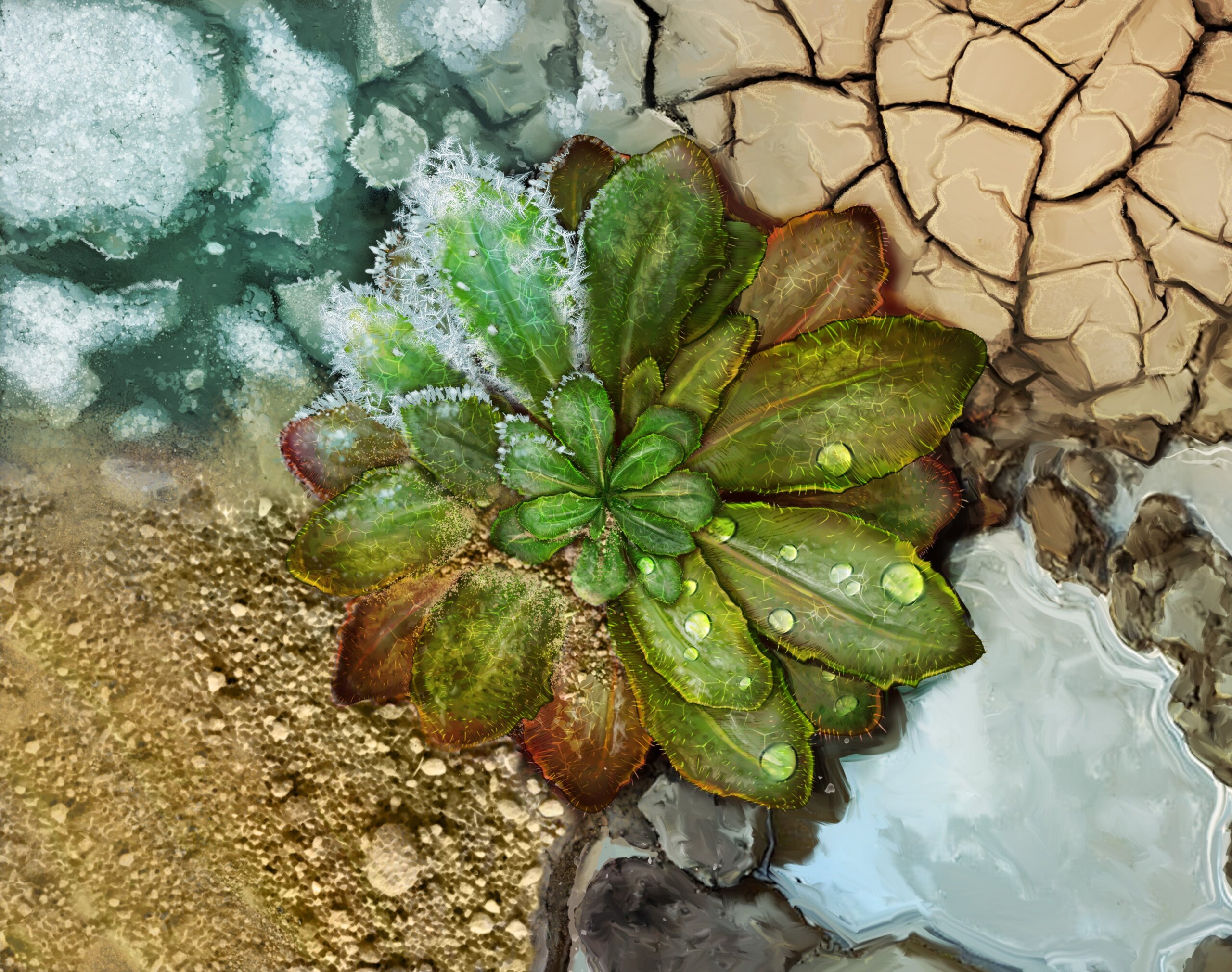
Biologists from the Department of Ecology and Environmental Conservation, Dr Agnieszka Rudak, and Dr hab. Maciej Wódkiewicz, are co-authors of an article on the rapid adaptation of plants to changing climatic conditions. The article, entitled Rapid adaptation and extinction in synchronized outdoor evolution experiments of Arabidopsis, was published in the prestigious journal Science.
In the era of climate change, a key question is whether species can adapt to new conditions quickly enough to avoid extinction. Although rapid evolution in natural environments has already been observed in many plant and animal species, we still poorly understand its pace, predictability, and limits. The aim of the study was therefore to examine what rapid climate adaptation in plants looks like under field conditions.
Using the model species Arabidopsis thaliana, the researchers conducted a multiyear outdoor evolution experiment at 30 locations across Western Europe, the Mediterranean Basin, the Levant, and the United States. At each location, they sowed the same mixture of 231 natural accessions of this species, analyzing changes in the genetic composition of its populations in real time.
The results showed that evolutionary changes occurred rapidly and often followed repeatable trends in similar climates. Plant lines originating from climatically matching regions more often increased their frequency in the population, confirming the importance of local adaptation. This adaptation was highly polygenic, meaning that it was based on the action of many genetic variants.
Rapid adaptation does not always suffice to avoid extinction. In the warmest environments, early repeatability of evolutionary changes distinguished populations that survived from those that went extinct. The study therefore shows that climate adaptation in plants is possible, but that it has limits, which is important for predicting biodiversity responses to climate change.
We warmly congratulate the authors on these interesting findings and on their article in Science!
Link to the article: https://www.science.org/doi/10.1126/science.adz0777