

Maternal care preserved in stone: bivalves brooded their young as early as 125 million years ago
03 07 2026
Fossils most commonly preserve the hard parts of organisms, such as shells and bones. This time, however, an international research team, member of which is a scientist from the Faculty of Biology at the University of Warsaw, uncovered a far more elusive record of ancient life. In the Early Cretaceous freshwater bivalves (Unionida), the researchers identified modified gills containing embryos and larvae at different stages of development. This is the earliest known direct evidence that bivalves brooded and protected their offspring more than 125 million years ago.
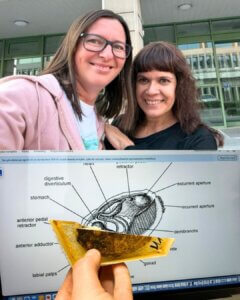
In living bivalves of the order Unionida (freshwater mussels), the gills perform more functions than respiration and filter feeding alone. In females, they form brood chambers (marsupia) in which embryos develop. The larvae, known as glochidia, subsequently leave the mother’s body and temporarily parasitise fish. This stage allows them to complete their development while also dispersing to new habitats. It is one of the most remarkable reproductive strategies among invertebrates and an important adaptation to life in rivers and lakes.
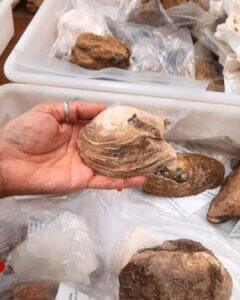
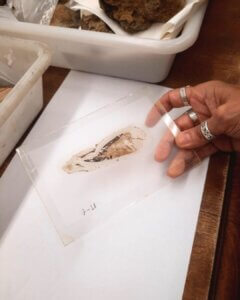
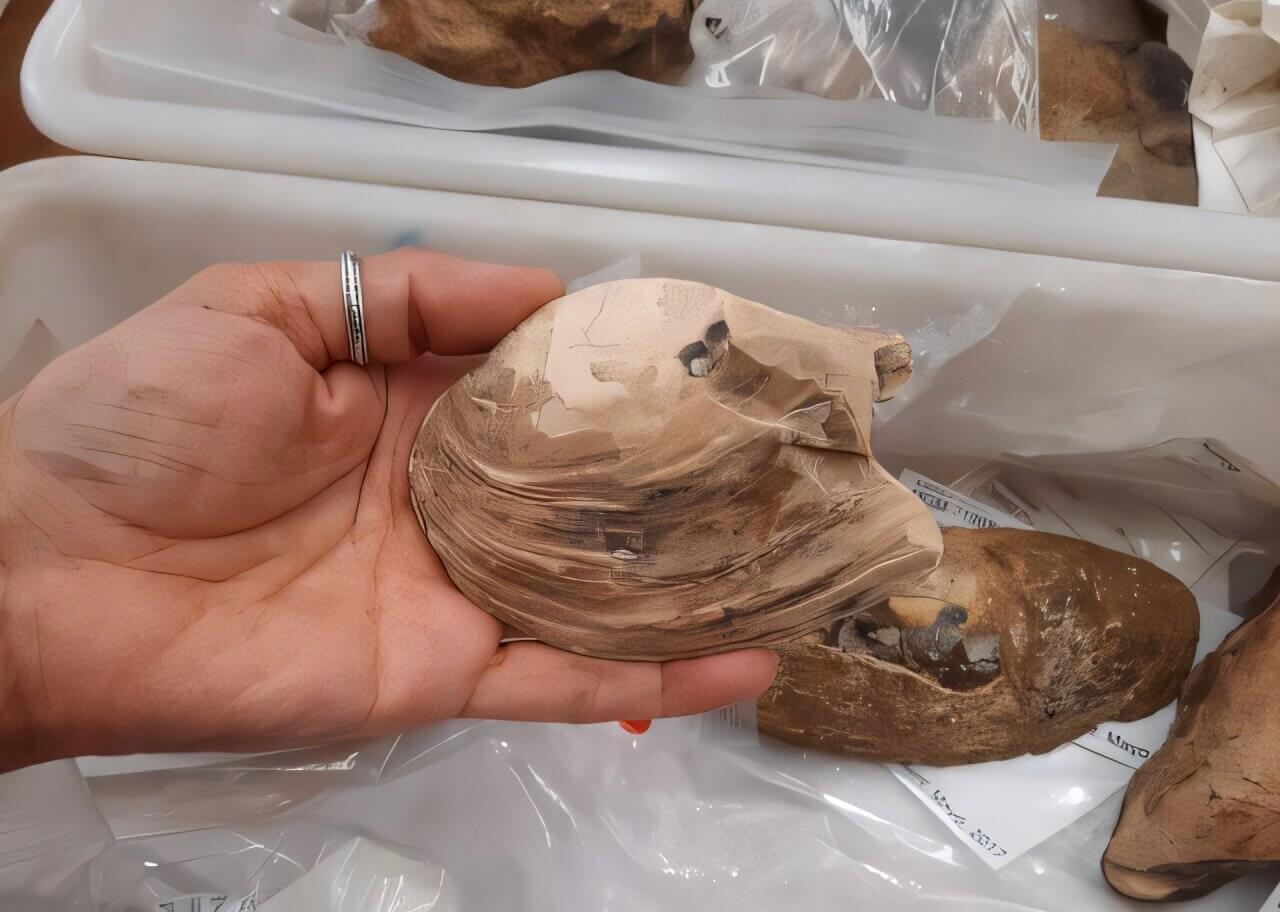
The researchers examined three fossil specimens of the bivalve Margaritifera valdensis from the Isle of Wight in southern England. The shells were embedded in epoxy resin, sectioned and prepared as thin and polished sections. They were then analysed using optical and digital microscopy, scanning electron microscopy and methods for determining the chemical composition of the preserved structures. This allowed the researchers to distinguish structures formed during the animal’s lifetime from minerals that appeared only after its death.
In two of the three specimens, the researchers identified successive developmental stages, from structures associated with the formation of egg cells and early embryos to more developed larvae. These were accompanied by gill supports, interlamellar junctions within the gill demibranch (that make the gills look and work like sieves), fossilised soft tissues and small calcium phosphate concretions. The arrangement of these structures indicates that the embryos were located within brood chambers within the gills. Some larvae retained two articulated valves arranged in a characteristic butterfly-like position. The researchers also showed that the mineral concretions may have served as a source of calcium used to form the first larval shell already in Mesozoic.
The discovery shows that complex maternal care had already evolved in freshwater bivalves by the Early Cretaceous. Brooding embryos within the gills and providing the resources required for shell mineralisation may have helped this group colonise freshwater habitats, where calcium is less abundant than in marine environments. The study also has broader significance for palaeontology. It demonstrates that the history of life can be reconstructed not only from shells themselves, but also from microscopic mineralisations and traces of soft-tissues hidden inside them. Well-known museum specimens examined using modern methods may therefore continue to reveal previously unknown behaviours of organisms that lived millions of years ago.
The article entitled “Exceptionally preserved embryos reveal maternal care in freshwater bivalves since the Cretaceous” was published in Scientific Reports. A co-author of the study is Dr Aleksandra Skawina from the Institute of Evolutionary Biology. The research was conducted by an international team led by Dr. Graciela Delvene, (Museo Geominero, which is part of the Spanish Geological and Mining Institute, IGME); the team members also included Dr. Rafael P. Lozano (Museo Geominero, IGME) and Dr. Martin C. Munt (University of Portsmouth, United Kingdom). The research was funded by the Spanish Ministry of Science, Innovation and Universities, the National Science Centre MINIATURA 7 grant awarded to Dr Skawina, and the Excellence Initiative, Research University Programme at the University of Warsaw.
The publication is available at:
https://www.nature.com/articles/s41598-026-56499-1