


How does artificial light at night affect life in the open waters of a lake?
13 08 2026
Researchers from the University of Warsaw have investigated how artificial light at night affects the vertical distribution of zooplankton and fish in a lake. Numerous studies have shown that artificial illumination can disrupt animals’ natural activity rhythms. In lake ecosystems, one of the best-studied examples is the diel vertical migration of zooplankton, which allows these organisms to reduce the risk of being eaten by fish while maintaining suitable conditions for growth and development.
During the day, many zooplankton organisms move into deeper, dimly lit water layers, where they are less visible to visually hunting fish. Remaining at greater depths, however, exposes them to lower temperatures, reduced food availability and, in some cases, oxygen deficiency. At night, zooplankton migrate towards the surface, where they can feed, warm up and compensate for oxygen deficits. This rhythm evolved in response to the regular alternation of day and night. Artificial illumination may disrupt it by maintaining the risk of detection by fish after dark. Until now, knowledge of the effects of artificial light at night on pelagic organisms has largely come from laboratory studies and experiments conducted in enclosed systems. Research carried out by scientists from the Department of Hydrobiology at the Faculty of Biology, University of Warsaw, complements these findings with field observations that simultaneously recorded the responses of freely moving fish and different groups of zooplankton.
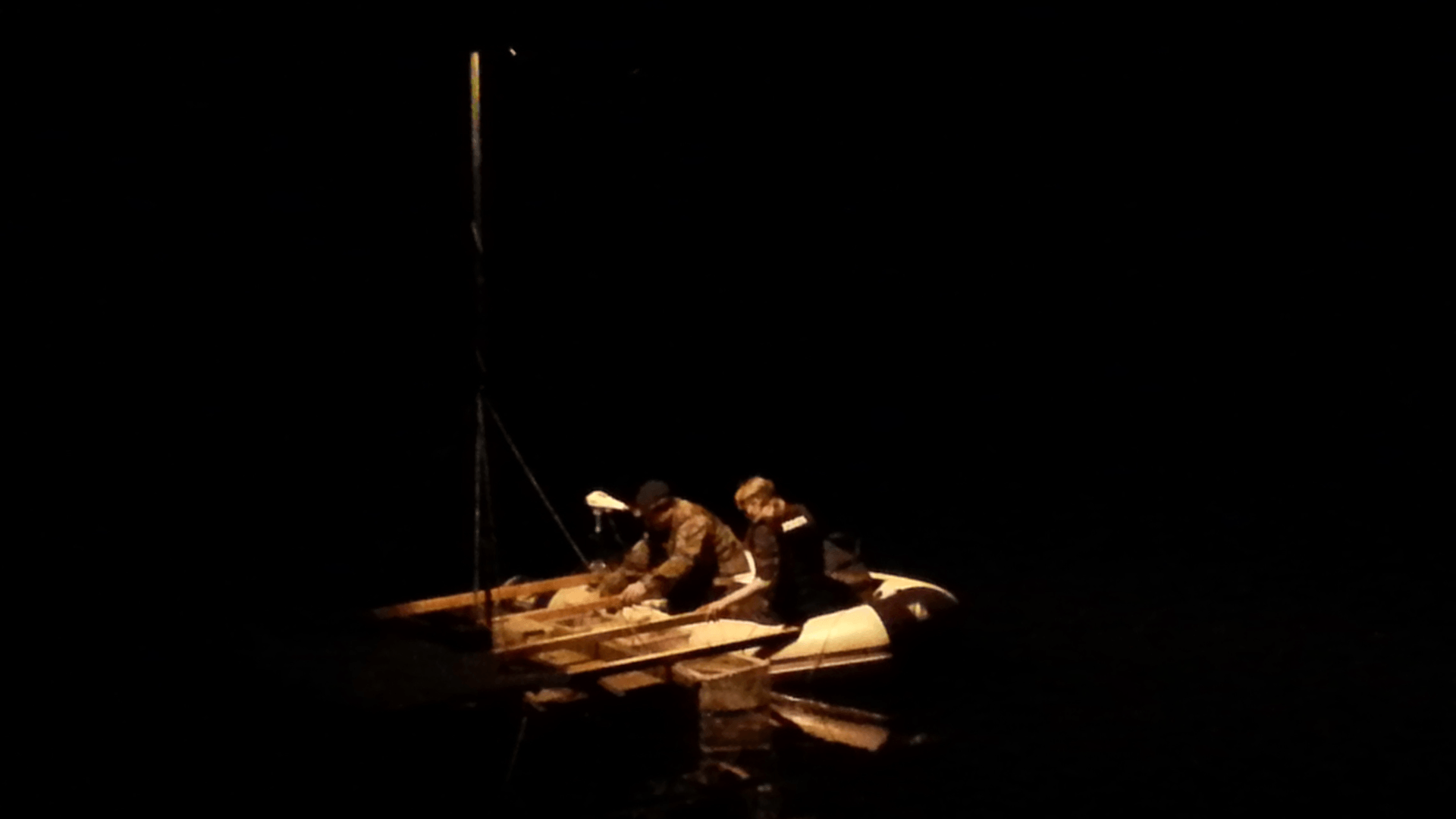
The study was conducted in Lake Roś. The researchers analysed the vertical distribution of zooplankton during the day, at night and one hour after switching on a high-pressure sodium lamp, which simulated artificial light at night, known as ALAN. The analyses covered zooplankton species composition, body size and the distribution of adult individuals, including egg-bearing females. The researchers also examined the distribution of phantom midge larvae (Chaoborus flavicans) and fish using sonar-based methods. In the presence of ALAN, planktivorous fish gathered in the illuminated surface layer, while some zooplankton moved deeper into the water column. The strongest responses were observed in phantom midge larvae, large cladocerans and egg-bearing females, which occupied deeper water layers after the light was switched on. The results indicate that artificial illumination at night primarily alters the spatial relationships between fish and zooplankton rather than the abundance of the community as a whole. The observed changes may have resulted both from zooplankton actively avoiding the illuminated layer and from fish selectively consuming the most visible individuals.
The study shows that even moderate artificial light at night produced by a high-pressure sodium lamp can change the distribution of predators and their prey and disrupt the natural migrations of zooplankton. Reducing the intensity and duration of illumination over water could therefore help limit the effects of ALAN on lake ecosystems.
The article, “Artificial light at night reshapes vertical distributions of lake zooplankton across population and community scales”, was published in Scientific Reports. The authors are affiliated with the Department of Hydrobiology at the University of Warsaw: Katarzyna Rutkowska, MSc, Dr Piotr Maszczyk; Prof. Mirosław Ślusarczyk; Dr Ewa Babkiewicz; Marcin Łukasz Żebrowski, MSc; and Dr Joanna Tałanda. The project was funded by the National Science Centre, Poland, under grant no. 2016/21/N/NZ8/00914, led by Dr Joanna Tałanda.
Link to the publication: https://www.nature.com/articles/s41598-026-60447-4