


A special issue of the Journal of Plankton Research dedicated to the memory of Professor Z. Maciej Gliwicz

18 05 2026
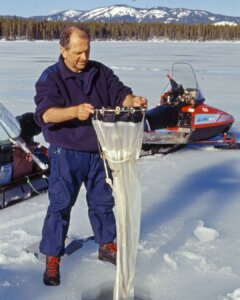
A special issue of the Journal of Plankton Research has been published in memory of the late Professor Z. Maciej Gliwicz, an outstanding biologist, inspiring academic teacher and long-time head of the Department of Hydrobiology at the Faculty of Biology, University of Warsaw.
Professor Gliwicz’s scientific legacy includes several hundred publications on the evolutionary ecology of aquatic organisms and functioning of pelagic communities. Many of these works were groundbreaking for the modern understanding of aquatic ecosystems and have become part of the global canon of ecological knowledge. Professor Gliwicz published in the most prestigious scientific journals, including several papers in Nature. He received the most important scientific awards, including the Foundation for Polish Science Prize, the Alfred Lityński Medal, the Excellence in Ecology Award and the August Thienemann Medal. He was a member of the Polish Academy of Sciences and the Polish Academy of Arts and Sciences, an honorary member of the Ecological Society of America, and was listed three times among the top 2% most cited scientists worldwide.
The volume entitled ‘Bottom-up and Top-down Regulation in the Ecology of Offshore Animals: The Lifetime Passion of Z. Maciej Gliwicz’ contains a dozen scientific articles published by researchers from all over the world. While not all of them knew Professor Maciej Gliwicz personally, their scientific interests and achievements have been strongly inspired by his work. Three of these articles were published by researchers from the Department of Hydrobiology at the University of Warsaw, who are younger colleagues of Professor Gliwicz. These papers explore themes central to Professor Gliwicz’s work, such as predation, food availability and the life history traits of planktonic animals in the functioning of aquatic ecosystems:
- Mikulski, A., & Pijanowska, J. (2026). Maternal contributions to individual behavior in Daphnia. Journal of Plankton Research, 48(3), fbag021. https://doi.org/10.1093/plankt/fbag021
- Bednarska, A., Pijanowska, J., & Pietrzak, B. (2026). Interclonal differences in incipient limiting level (ILL) in Daphnia magna. Journal of Plankton Research, 48(3), fbag022. https://doi.org/10.1093/plankt/fbag022
- Ślusarczyk, M., Brzeziński, T., Dawidowicz, P., Kapusta, A., Zwijacz-Kozica, T., Kuczyński, T., Ochocka, A., & Kozłowski, K. (2026). Effects of fish stocking and removal on plankton communities and trophic status in deep alpine-type lakes of the Five Lakes Valley (Tatra Mountains). Journal of Plankton Research, 48(2), fbag016. https://doi.org/10.1093/plankt/fbag016
Intergenerational memory of predation risk in Daphnia
In “Maternal contributions to individual behavior in Daphnia”, the researchers examined whether maternal experience affects the behavior of offspring. They tested whether exposure of female Daphnia magna to chemical cues released by fish, known as kairomones, changes the response of young individuals to predation risk.
The study focused on diel vertical migrations, one of the mechanisms used by planktonic animals to avoid predators. This behavior involves moving deeper into the water column, into darker layers where organisms are less visible to visually hunting fish. The strategy increases survival chances, but comes at a cost, as deeper water layers are usually colder, poorer in food and often oxygen-depleted.
The study shows that anti-predator behavior in Daphnia depends not only on the current presence of a predator, but also on information transmitted across generations. The authors suggest that the optimization of defense may involve more than one generation. The study also has methodological significance: fish kairomones degrade rapidly, so the timing of measurements of different life parameters and the renewal of the medium can influence the results of experiments on plankton behavior and life-histories.
Differences between Daphnia genotypes in the use of food
In the article “Interclonal differences in incipient limiting level (ILL) in Daphnia magna”, the authors analyzed clones of Daphnia magna originating from small and large water bodies, namely a pond and a lake. They compared their somatic growth rate and reproduction under different levels of food availability to determine whether genotypes of the same species differ in food requirements and whether these differences may be related to the type of environment from which they originate.
The results show that Daphnia magna from different clones do not use resources in the same way. They differed both in somatic growth rate and in population growth potential. Daphnia from pond-derived clones reached their maximum somatic growth rate at lower food availability, whereas those from one of the lake-derived clones required more available food to reach their highest growth rates and reproduction efficiency. The authors interpret these differences as a possible effect of local adaptation to different food regimes.
The study shows that assuming a single “sufficient” food level for an entire species may be an oversimplification. Even within one species, different genotypes may respond differently to resource availability. This has implications for laboratory experiments, ecological modelling of plankton population dynamics and predicting resulting changes at community and ecosystem levels.
Effects of Fish Stocking on the Functioning of Tatra Lake Ecosystems
The research presented in the article “Effects of fish stocking and removal on plankton communities and trophic status in deep alpine-type lakes of the Five Lakes Valley (Tatra Mountains)” examines the ecological consequences of fish stocking in high-mountain lakes of the Five Lakes Valley in the Tatra Mountains and the attempts to reverse these changes through fish removal. The studied lakes are postglacial, alpine-type water bodies located above the timberline. For thousands of years they were naturally fishless, because a waterfall and the drainage system prevented fish from colonizing them upstream.
This changed in the mid-20th century, when some of these valuable ecosystems were stocked with trout, including brook trout (Salvelinus fontinalis), a species native to eastern North America. The introduction of fish strongly transformed the plankton community. In smaller lakes, such as Przedni Staw Polski and Czarny Staw Polski, large-bodied zooplankton, which had previously been effective grazers of phytoplankton, disappeared. As a result, the trophic status of the lakes increased and water transparency declined markedly.
The researchers also analyzed the effects of partial fish removal from Przedni Staw Polski. These actions rapidly improved water transparency and reduced phytoplankton biomass, but did not lead to the full recovery of the natural zooplankton community. Large-bodied cladocerans, particularly sensitive to fish predation, did not recolonize the lake.
The study shows that reducing fish abundance can rapidly improve water quality, but is not sufficient to fully restore the natural functioning of such fragile ecosystems. The authors indicate that complete restoration of these high-mountain lakes would require the eradication of introduced fish.
Together, the three articles show that plankton research helps us understand processes operating at many levels of biological organization: from the behavior of individual organisms, through differences between genotypes, to the functioning of entire lake ecosystems. The publications are available in open access on the Journal of Plankton Research website.


The entire volume “Bottom-up and top-down regulation in the ecology of offshore animals. The lifetime passion of Z. Maciej Gliwicz” in the Journal of Plankton Research is available at:
https://academic.oup.com/plankt/issue/48/2#2484669-8541559