
The role of fungi in the decomposition of Canadian goldenrod shoots
27 03 2026
Scientists from the Faculty of Biology, University of Warsaw, Kamil Kisło, Marta Wrzosek (Botanic Garden), and Marcin T. Mazurkiewicz, and Patryk Czortek (Białowieża Geobotanical Station), together with researchers from the Institute of Dendrology of the Polish Academy of Sciences and the Forest Research Institute, are the authors of an article on how the degree of Canadian goldenrod cover affects the mechanisms of shoot decomposition. The paper, titled “Fungal community assembly during Solidago canadensis shoot decomposition is driven by the plant’s invasion gradient”, was published in the journal NeoBiota.
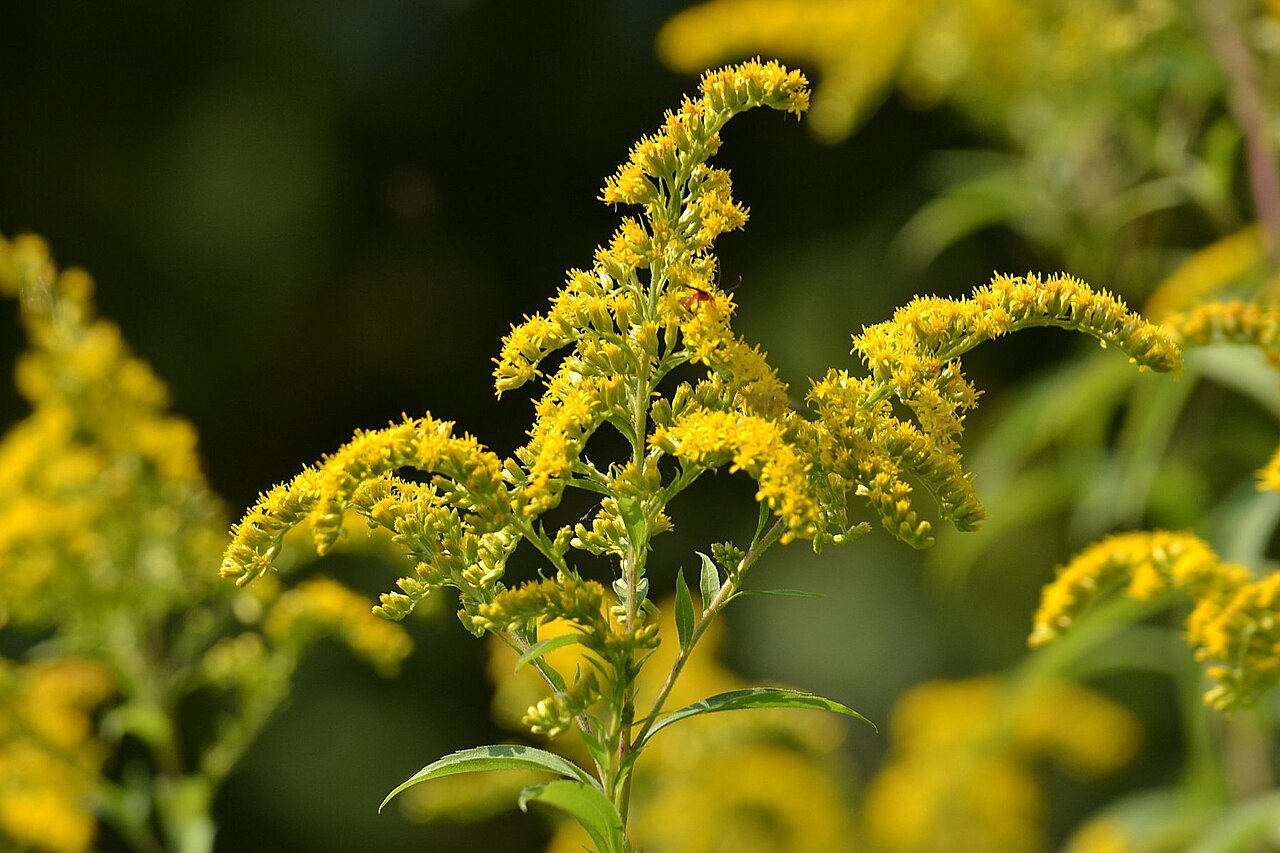
Canadian goldenrod is an invasive plant native to North America. Its presence poses a threat to biodiversity in Europe, Asia, and Australia. Although much is known about its impact on local plants, birds, and insects, the mechanisms behind its invasiveness are still not fully understood.
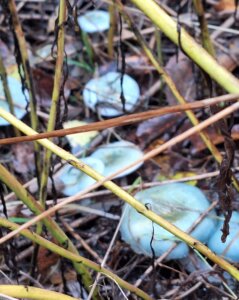
Goldenrod shoots are especially problematic in the environment because they decompose slowly. Based on year-long analyses, the researchers showed that the rate of goldenrod decomposition does not depend on the level of ground cover by this species. At the same time, the results indicate that goldenrod may affect ecological processes related to the species composition of fungi decomposing its shoots.
The species composition of fungi changes during the decomposition of dead shoots. At the early stage, an important role is played by endophytes, that is, microorganisms naturally associated with the internal tissues of the plant. As decomposition progresses, available resources are used up and competition increases, so fungal communities shift toward saprotrophs, which are responsible for the breakdown and mineralization of the remaining goldenrod shoots.
Interestingly, the most common fungal species did not have a clear effect on either speeding up or slowing down the whole process. The most abundant fungi may have been efficient colonizers of dead shoots rather than the main organisms responsible for decomposition.
The study shows that Canadian goldenrod, as an invasive species, can affect ecological processes not only during the growing season, but also after shoot dieback, in areas it has colonized outside its natural range.
This paper helps us better understand the biology of invasive Canadian goldenrod, which may in the future contribute to the development of more effective ways of limiting its spread.
Congratulations!
Open access was financed by IDUB IV.4.1. A complex programme of support for UW PhD students
Link to the article: neobiota.pensoft.net/article/165880/
Photo: Kamil Kisło, Joanna Boisse (https://commons.wikimedia.org/)