

Research on the movements of the Eurasian lynx (Lynx lynx) with the participation of our scientists
09 02 2026
Dr hab. inż. Robert W. Mysłajek, Prof. of the University, Dr hab. Sabina Pierużek-Nowak, Prof. of the University, and Michał Figura, MSc, from the Department of Ecology and Evolution of Animals are co-authors of a scientific publication on extra-territorial excursions of the Eurasian lynx during the mating season. The article entitled “Extra-territorial excursions of Eurasian lynx (Lynx lynx) during the mating season across Europe” was published in the journal Proceedings of the Royal Society B: Biological Sciences.
The Eurasian lynx (Lynx lynx) is a territorial species and usually moves within its established home range. However, short trips outside this territory are sometimes observed. During the mating season, such excursions may increase the chances of finding a mate, but in wild cats they are still poorly understood. The aim of the study was to determine how often and at what time during the mating season lynx undertake such excursions, as well as how far and how long they travel.
The authors analysed a large set of telemetry data collected between 1995 and 2023 from eight European lynx populations, covering 125 individuals. Only sexually mature animals with established home ranges were included. Extra-territorial excursions were identified based on GPS data as repeated locations outside the home range, lasting at least one day and far enough from the border not to be simple movements along the territory edge.
The results showed clear differences between sexes. About one third of males and around one tenth of females undertook extra-territorial excursions. Males did so more often, usually travelled farther and for longer periods, and their trips were concentrated around the peak of the mating season, which supports the interpretation that these movements are related to active mate searching. In females, excursions were rarer and more spread out over time. An important finding was also that reintroduced individuals undertook such excursions more often than lynx from stable populations, which may result from lower familiarity with the new area and a higher tendency to explore.
The authors emphasise that extra-territorial excursions may be important for the conservation of the species.. On the one hand, they can support gene flow and reduce the risk of inbreeding, but on the other hand they increase exposure to human-related threats, such as road collisions or poaching. Therefore, the mating season and the possibility of such movements should be taken into account in population monitoring and in planning reintroductions and population reinforcements.
Congratulations on these interesting results! The full article is available at:
https://doi.org/10.1098/rspb.2025.2235
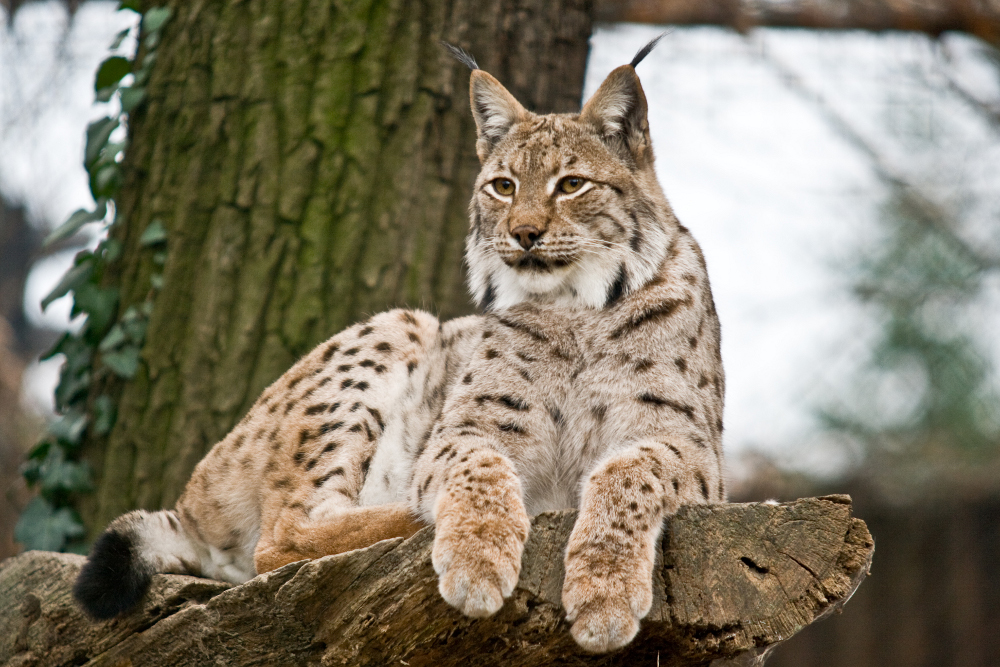
Fot. Roberta F. (https://commons.wikimedia.org/wiki/File:Euroazijski_ris_Lynx_lynx_Zagreb_112010_1.jpg)
