
European mycology at the intersection of academic and citizen science
16 04 2026
Dr hab. Julia Pawłowska (corresponding author) and Dr Igor Siedlecki from the Institute of Evolutionary Biology are co-authors of the scientific article entitled “Mapping the landscape of mycological organizations in Europe: where citizen science meets professional mycology”, published in the journal Biodiversity and Conservation.
The study focus on the characterization of the current landscape of mycological organizations in Europe and shows how citizen science and professional science are intertwined today in research on fungal diversity.
Interest in fungi and sharing knowledge about them have a very long tradition, but formal mycological organizations started to be established relatively late, only at the end of the 19th century. Moreover, these organisations are developing unevenly and in majority independently across Europe. As a result, there is still no comprehensive, up-to-date, and comparative picture of European mycological organizations and fungal-focused citizen science projects.
Results of surveys conducted during the study showed that the number of mycological organizations differs strongly between countries and is not related to the size of the country nor the number of inhabitants. Most of the organizations studied also operate on a voluntary basis. As many as 97% of the organizations bring together people from academia and mycologists without a formal academic background, which shows that contemporary European mycology is largely based on cooperation between professionals and enthusiasts.
In the case of citizen science, low-budget initiatives dominated, mainly based on collecting observations and photographic documentation of fungal occurrence. Although more than half of the projects declare that collected observations are being deposited in public repositories, such as GBIF, a large part of the data still remains stored and published locally, which makes its later use in nature conservation at the pan-European level more difficult.
The authors conclude that European mycology is currently developing at the intersection of academic and non-academic communities, and that mycological organizations may become key hubs integrating research, education, nature conservation, and social participation. They also indicate that language, cultural, and economic barriers, as well as the scattered storage of fungal occurrence data, are among the factors slowing down an integrated, pan-European fungal monitoring
The authors also emphasize that particularly important for the development of such a large-scale monitoring are common documentation standards, better tools for integrating data and transferring it to large databases such as GBIF, as well as the creation of lasting forms of cooperation between organizations and citizen science projects.
The study was created within FunDive, an international project focused on fungal monitoring in Europe (https://www.facebook.com/profile.php?id=61566573073577).
Funding source: 2022–2023 Biodiversa + COFUND call, under the European Biodiversity Partnership programme, and the National Science Centre, Poland (grant 2023/05/Y/NZ9/00106).
We warmly congratulate the authors on this publication! Link: https://doi.org/10.1007/s10531-025-03219-2
Monitoring and mapping fungal diversity for nature conservation: https://fun-dive.eu/en/home-2/
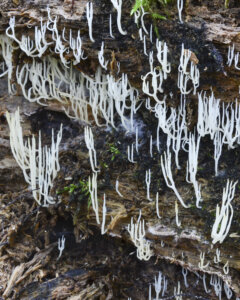
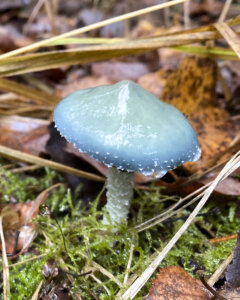
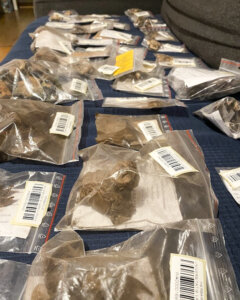
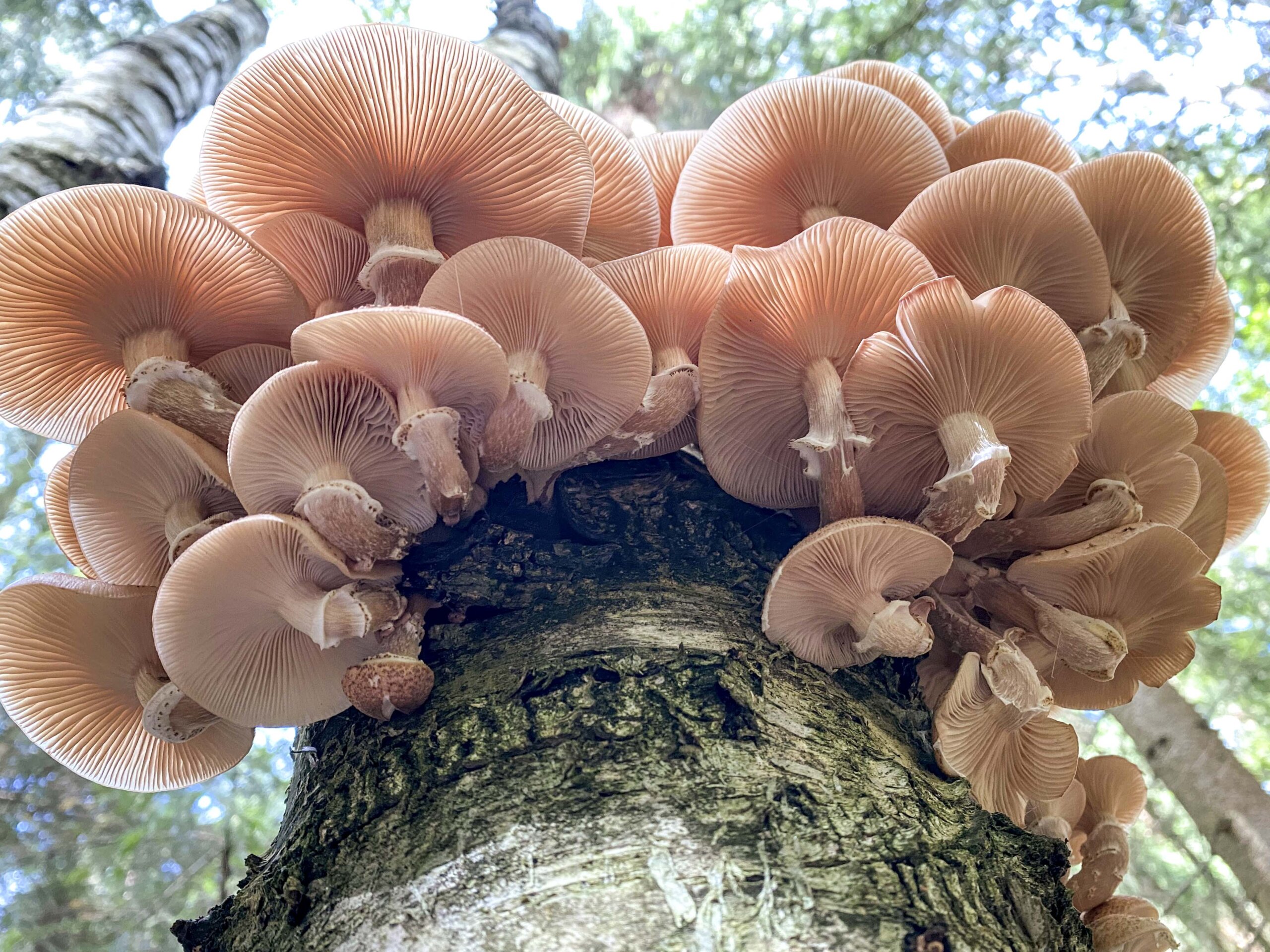
Fot. Julia Pawłowska and Jacob Heilmann-Clausen