
NAWA Grant for Dr. Klaudia Dębiec-Andrzejewska for the Development of a Microbiological Fertilizer Based on Biogas Desulfurization Sludge
12 01 2026
Dr. Klaudia Dębiec-Andrzejewska from the Laboratory of Agricultural and Industrial Microbiology at the Institute of Bioengineering has received funding from the National Agency for Academic Exchange (NAWA) for the project entitled “Development of a microbiological fertilizer with controlled release based on biogas desulfurization sludge and its application in supporting blueberry growth”. The project is carried out in a consortium with Chengdu University (China).
Blueberry, as a crop plant, requires well-sunlit locations and acidic soils for optimal growth and development. When the soil is alkaline, plants absorb nutrients less efficiently and more often require fertilization treatments to help maintain an appropriate soil pH.
The aim of Dr. Dębiec-Andrzejewska’s project is to develop an innovative microbiological fertilizer that will enable long-term and controlled release of sulfur compounds, acidifying the soil in the blueberry root zone and supporting the creation of more favorable conditions for plant development. The fertilizer is intended to be stable over time (for more than 120 days) and to reduce the need for frequent fertilization adjustments during the growing season.
In addition, the researchers aim to deepen knowledge about how microorganisms function in soil and how they can support blueberry growth in the root zone. As part of the research, the most effective microorganisms will be selected, a fertilizer form enabling their stable, long-term activity will be developed, and the solution will then be tested first under controlled conditions and later in real cultivation to assess its effectiveness and safety.
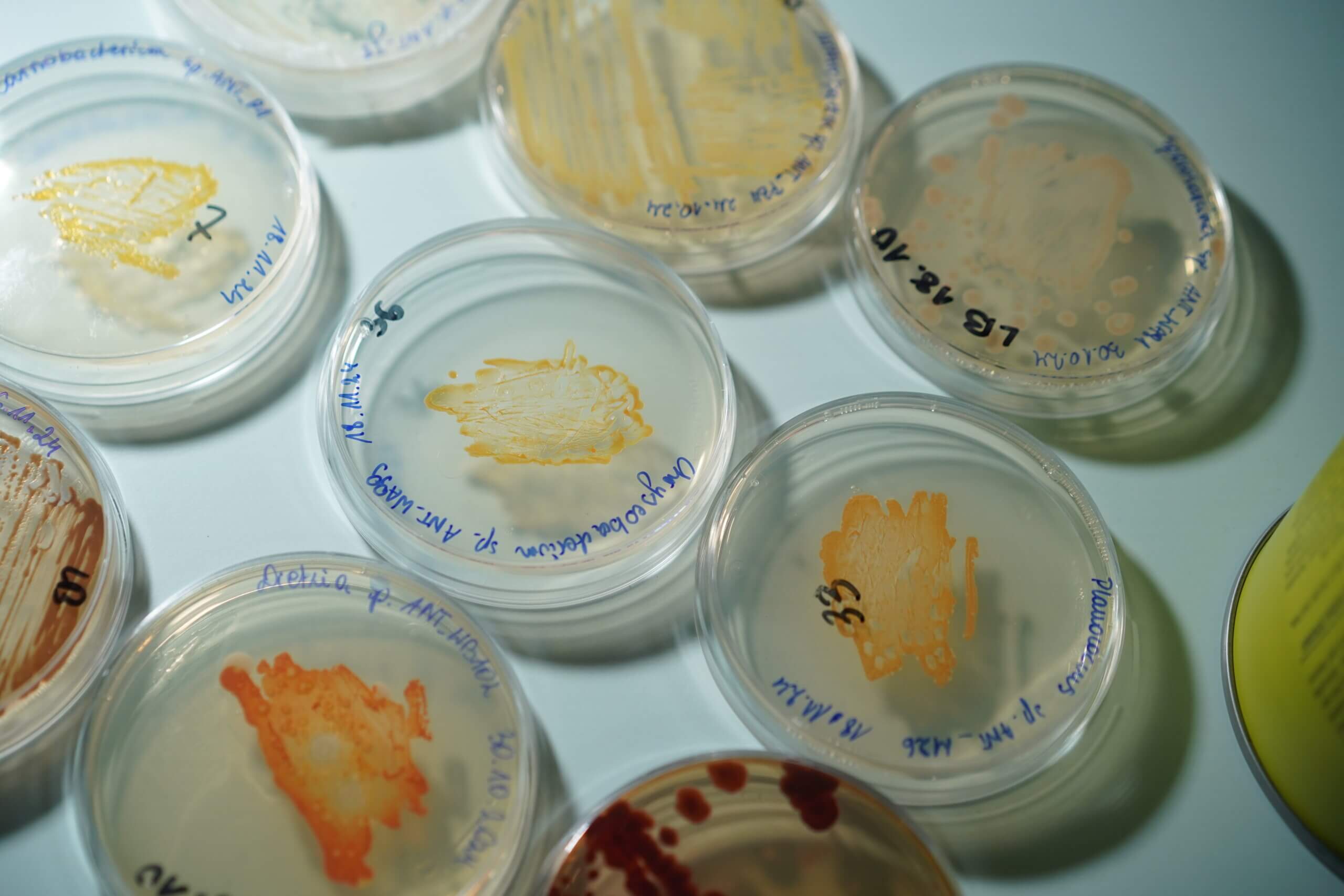
The innovativeness of the project lies in the preparation of special buffering carriers that will maintain sulfur-oxidizing bacteria (SOB) and make use of sludge from biogas desulfurization (BDS). This is a by-product generated during biogas purification in biogas plants, including those connected with municipal wastewater treatment. In this approach, “waste” becomes a valuable raw material for the production of a bio-based fertilizer product.
The cooperation between the University of Warsaw and Chengdu University is based on the complementary competences of both teams. Researchers from the University of Warsaw contribute expertise in environmental microbiology, soil property analyses, and evaluation of the developed solution under cultivation conditions. In turn, the team from Chengdu University supports the project in the selection and identification of sulfur-oxidizing bacteria, chemical analyses of sulfur material from biogas desulfurization, and work on developing a stable fertilizer form in which microorganisms can remain active over a long period.
We warmly congratulate on receiving the funding and wish the team successful and fruitful research!