


NCN Preludium grant for a palaeoenvironmental study of Lipsk archaeological site (NE Poland)
08 12 2025
MSc Anita Murawska, PhD candidate in the Doctoral School of Exact and Natural Sciences, from the Institute of Environmental Biology, Department of Ecology and Environmental Conservation has received funding from the National Science Centre in the amount of PLN 140,000 under PRELUDIUM 24 call for the project entitled “Multi-proxy palaeoenvironmental studies of the archaeological site in Lipsk (NE Poland)”.
The project focuses on a comprehensive reconstruction of the palaeoenvironment of the archaeological site Lipsk 81 (Augustów district, NE Poland), studied in cooperation with the team of A. Wawrusiewicz (Podlaskie Museum in Białystok), Dr M. Przeździecki (University of Warsaw), and Dr M. Frączek (Jan Kochanowski University in Kielce).
This site is a relatively recent discovery and stands out for its exceptional research potential. Numerous traces of Subneolithic hunter-gatherer activity were documented. In addition, the latest data also indicate the presence of a Final Palaeolithic settlement episode (ca. 11 000 years ago). This makes Lipsk 81 one of the oldest and most valuable stratified sites of this kind in Poland.
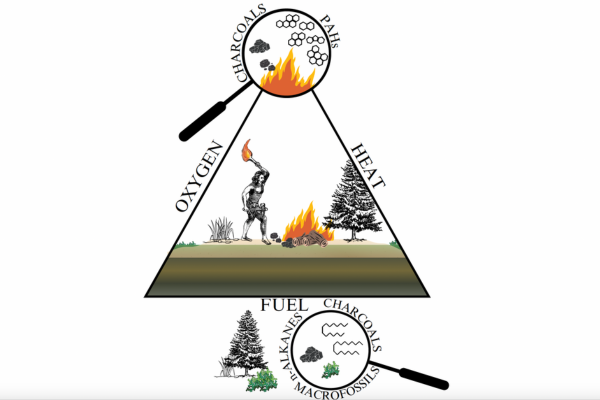
The project aims to reconstruct environmental changes that occurred at the site over several millennia and to determine whether they coincided with the activity of prehistoric communities. To achieve this, a broad range of archaeometric methods combining biological and chemical approaches will be applied. Both macroscopic markers (plant macroremains, charcoal) and molecular markers, including n-alkanes and polycyclic aromatic hydrocarbons (PAHs), will be analysed to provide information on dominant vegetation and fire-related processes.
A comparative analysis of these markers will help to improve their interpretation and assess the degree of complementarity between different types of data. Furthermore, integrating laboratory results with archaeological evidence will enable the identification of potential links between settlement episodes and local environmental changes.